Serving Mountain View, CA and surrounding areas. (650) 582-0077
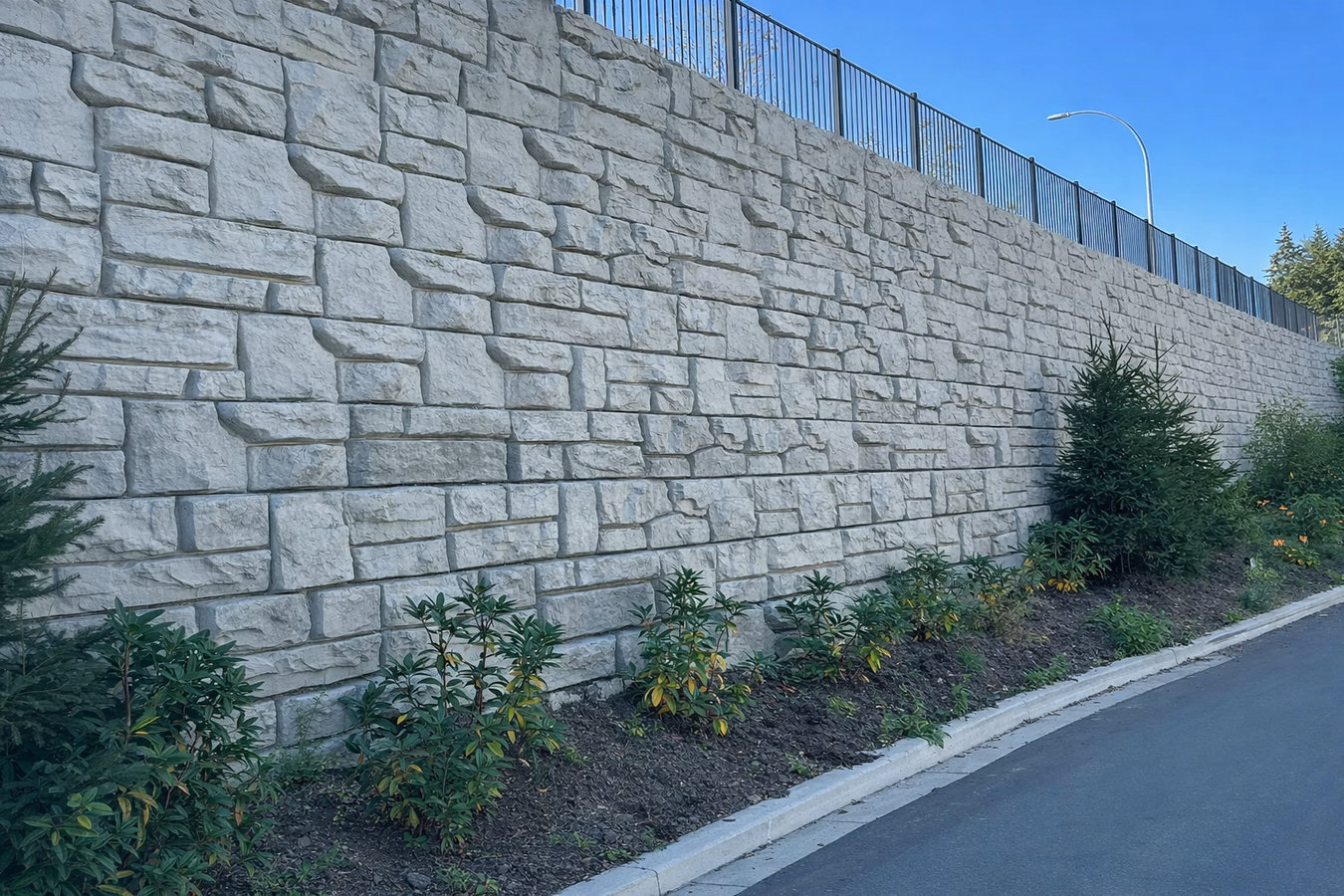
Soil shifting after the rains? We build concrete retaining walls that hold back Bay Area clay, drain properly, and stand straight for decades.
Concrete retaining walls in Mountain View hold back soil on slopes so it does not slide, erode, or push into your yard or foundation. Most residential wall projects take a crew two to five days from excavation to finished pour, depending on height and site access.
If you have a slope that creeps after winter rain or a raised planting bed that is slowly losing ground, a retaining wall is the permanent fix. Mountain View homes - especially those built in the 1950s and 1960s on naturally graded lots - often have hillside areas that get worse every wet season. A properly built wall with built-in drainage stops that movement for good. Many homeowners pair a retaining wall with concrete floor installation when they reclaim the flat space behind the wall for a patio or utility area.
Mountain View sits on clay-heavy soils that expand when wet and contract in summer, which puts more pressure on retaining structures than most homeowners realize. Getting drainage right - not just the wall itself - is what separates a wall that lasts from one that leans or cracks within a few years.
If a raised bed or slope slowly moves toward your yard, driveway, or neighbor's property after winter rain, the ground is not being held in place. Mountain View's clay-heavy soils absorb a lot of water and can shift significantly during a wet season. A retaining wall stops that movement before it reaches your hardscape or foundation.
A retaining wall that tilts forward - even slightly - is under more stress than it can handle. Horizontal cracks near the middle of a wall face are especially serious, because they often mean the wall is bending under soil pressure. Do not wait; a wall that fails can damage property and create a safety hazard.
If water collects at the bottom of a hillside or raised area every time it rains, the slope is not draining properly. That standing water saturates the soil and increases pressure on whatever holds the slope back - or speeds up erosion if nothing does. A retaining wall with built-in drainage solves both problems at once.
Many Mountain View homes - especially those on lots with natural grade changes - have sloped areas that are essentially unusable. A retaining wall can convert that wasted hillside into flat, functional space: a patio, a garden bed, or a yard your kids can play in. If you have been ignoring a slope for years, that is the conversation to have.
We build cast-in-place concrete retaining walls for residential and light commercial properties across Mountain View. Every wall starts with proper excavation and a footing deep enough for local soil and seismic conditions. We form, reinforce with steel rebar, pour, and cure before backfilling - and we include a drainage layer and weep holes on every project so water pressure never builds up behind the wall. For projects over four feet, we work with a structural engineer and handle the Mountain View building permit from start to finish.
Beyond basic retaining walls, we also handle work that often goes hand-in-hand with wall projects. If reclaiming a slope means you now have a flat area that needs a finished surface, we can follow up with concrete floor installation for a patio or utility slab. For walls that are part of a larger site work project, we can also pour concrete footings to support any adjacent structures at the same time - saving you a return mobilization and keeping the schedule tight.
Suits homeowners with eroding slopes, failing old walls, or hillside lots where usable yard space has been lost to grade.
Suits taller projects that require a structural engineer review and city permit - we coordinate both so you do not have to.
Suits sites where water pooling behind an existing wall or at the base of a slope is already causing problems.
Suits homeowners with a leaning, cracked, or failed block or wood wall that needs to come out and be replaced with concrete.
Mountain View sits on Bay Area alluvial soils with a high clay content. Clay swells when wet and shrinks when dry, and that seasonal movement puts steady stress on any structure holding soil back. A wall built without accounting for that ground behavior - with a footing that is too shallow or no drainage layer - will show it within a few years: forward lean, horizontal cracking, or erosion at the base. The Bay Area also sits near active fault lines, which is why taller walls here require a structural engineer's review. That review is not just a formality; it is confirmation that the reinforcement and footing depth are right for the conditions.
We work across Mountain View and the surrounding area regularly. Homeowners in Los Altos, CA deal with similar hillside and clay-soil conditions, and so do homeowners in Palo Alto, CA where older lots often have original walls that are now 40 or 50 years old. Whether you need a new wall, a replacement, or just want to stop a slope from moving any further before the next rainy season, give us a call - we will come look at it and tell you exactly what it needs.
We schedule a visit to your property - not a quote over the phone. We look at the slope, the soil, site access, and whether the project needs an engineer. You get a written estimate covering permits, drainage, and cleanup before anything is signed.
For walls taller than four feet, we submit the permit application to Mountain View's Building Division and coordinate with a structural engineer if required. The approval process typically takes one to three weeks - we handle it entirely so you do not need to visit city hall.
The crew digs the footing trench, sets forms, places steel reinforcement, and pours the concrete - usually over one to two days. Then the concrete cures for at least a week before forms come off or soil is placed behind the wall. Rushing that curing period is a common cause of early wall failure, and we do not skip it.
Once cured, we install the drainage layer, backfill in stages, and clean up the site. If a city inspection is required before backfilling, we schedule that appointment. Before the crew leaves, we walk the finished wall with you and explain what to watch for over the first year.
We reply to all inquiries within one business day. No cost, no commitment to get a written estimate.
We come to your property, review the site, and give you a written estimate that covers permits, drainage, and cleanup - no surprises.
(650) 582-0077We include a drainage aggregate layer and weep holes on every retaining wall we pour - not as an add-on, but as standard practice. Water pressure behind a wall is the leading cause of early failure in Bay Area clay soils, and solving it starts with the design, not after the wall is already leaning.
We pull building permits through the City of Mountain View Building Division and coordinate structural engineer reviews for walls over four feet. You do not navigate city hall or fill out forms - we handle the paperwork from application to final inspection sign-off.
Every wall we build in Mountain View is reinforced and footed for local seismic conditions - not built to a generic spec. The USGS earthquake hazards program maps the Bay Area as one of the highest seismic risk zones in the country, and that shapes how we detail every wall we build here.
We wait the full curing period before backfilling - a minimum of one week before any soil goes behind the wall. Cutting this step short is one of the most common causes of early wall failure, and it is a corner we never cut to save a day on the schedule.
These are the details that determine whether a retaining wall is still standing straight in ten years or needs to be rebuilt after the second wet season. If you want a wall built to last in Mountain View's conditions, call us and we will walk you through exactly what we plan to do.
Once a retaining wall gives you flat usable space, we can pour a finished concrete slab for a patio, workshop, or utility area.
Learn MoreFootings for fences, posts, or structures adjacent to your retaining wall can be poured at the same time to keep the project on one schedule.
Learn MoreMountain View's dry season fills up fast - call today and lock in your start date before the schedule closes.